Four PoE Gigabit ports around a Raspberry Pi CM5.
Carrier board for the Raspberry Pi Compute Module 5 with four PoE-powered Gigabit Ethernet ports, USB 3.0 and PCIe expansion. It also carries relays, environmental sensors and a sub-GHz radio. Designed in Altium with impedance-controlled high-speed routing; the board is built and working.
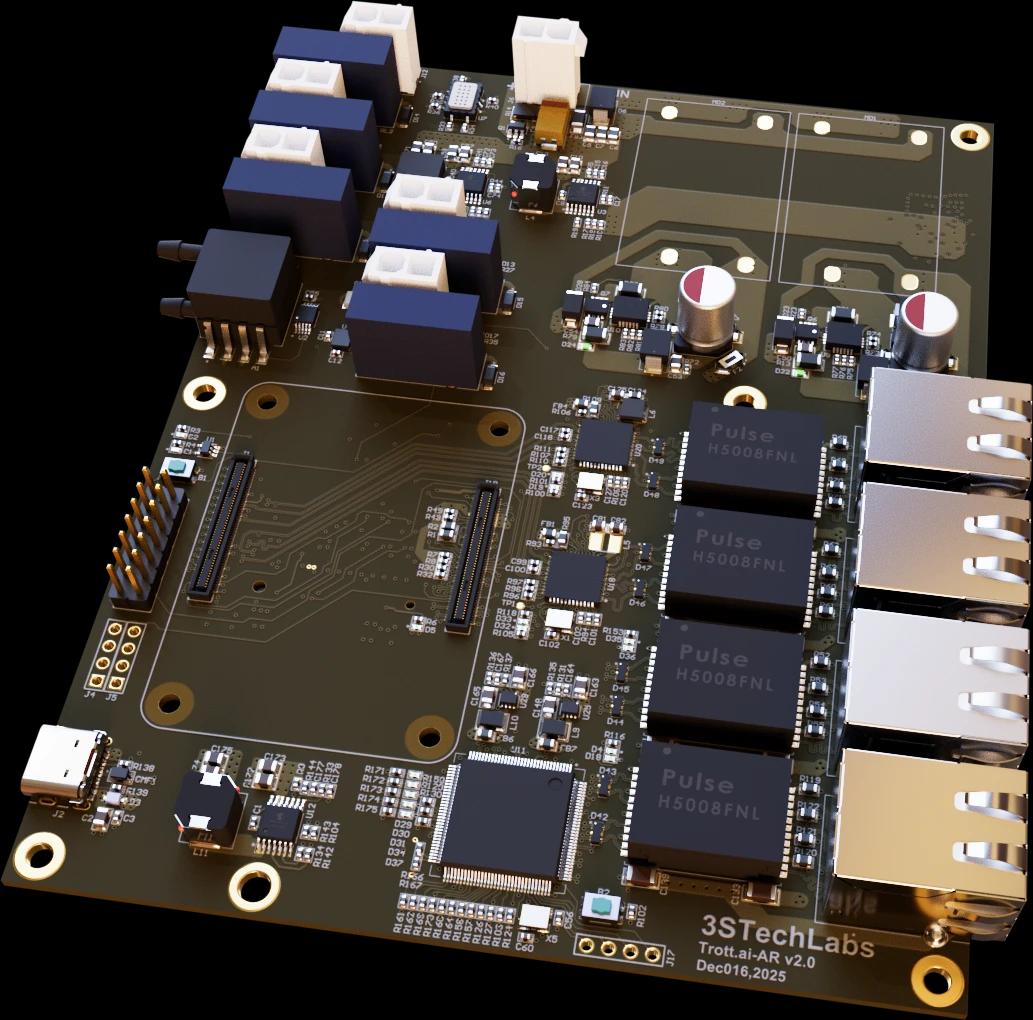
The board
The board measures 4425 × 5665 mil and is built on 6 layers (3 signal and 3 plane) with a finished thickness of 60.6 mil on FR4. It carries 440 components (305 top, 135 bottom), 1,665 pins on 376 nets and 882 through vias. The CM5's high-speed lanes are split between a PCIe Gigabit controller and two USB 3.0 Ethernet controllers, each feeding an RJ45 with magnetics and PoE power sourcing.
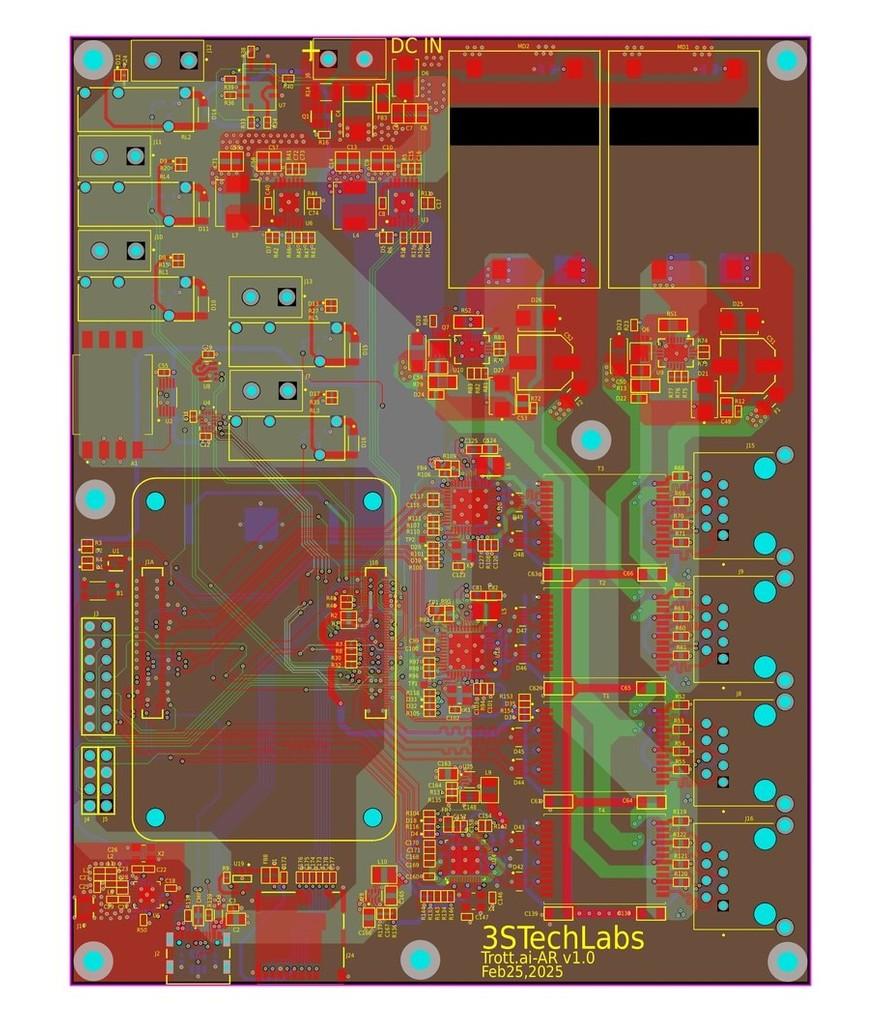
All layers combined: PCIe, USB 3.0 and Ethernet differential pairs routed at 90 Ω ±10% against solid reference planes, with relay drivers, sensors and the radio kept clear of the high-speed section.
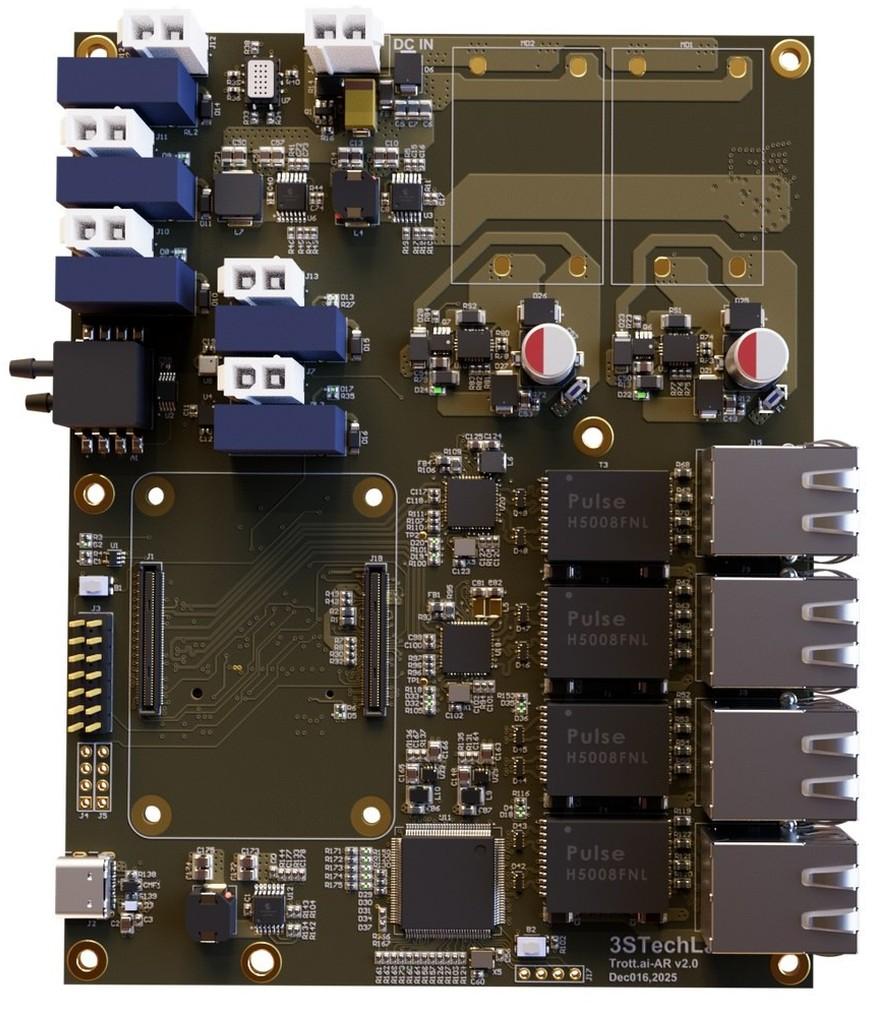
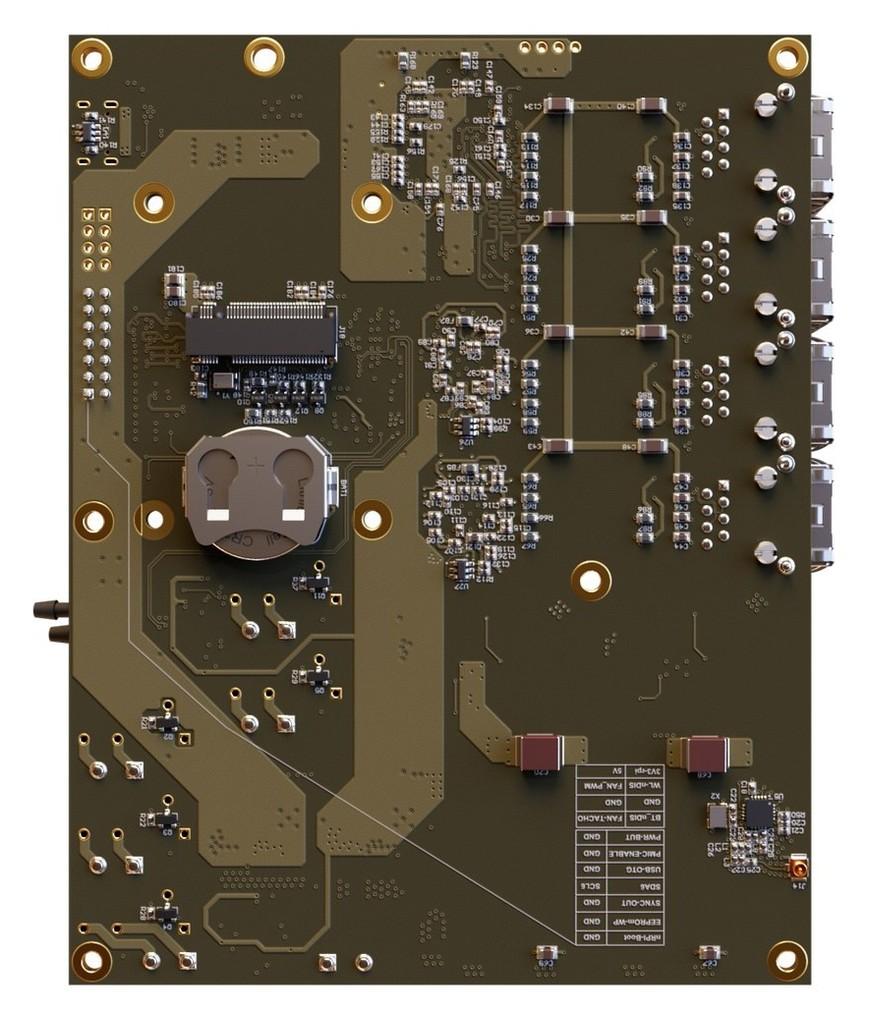
Design highlights
CM5 high-speed interfaces split into PCIe (Realtek RTL8125BG) and USB 3.0 (2 × Microchip LAN7800) Ethernet controllers.
Four RJ45 ports with magnetics and PoE power sourcing from two ADI LTC4279 PSE controllers.
PCIe, USB 3.0 and Ethernet pairs routed as 90 Ω impedance-controlled differential pairs on a 6-layer stack-up.
Six 5 VDC relays, a Bosch BMI270 IMU, temperature and gas sensors, and a TI CC1101 sub-GHz radio placed away from the high-speed section.
USB-C power input with battery supply and Richtek RT2875 buck converters for the 5 V and 3.3 V rails.
Built, assembled and working; microSD storage, GPIO header and USB OTG for debug.
Building something similar?
Multi-camera, edge AI or high-speed boards. Talk to the team that designed this one.
